



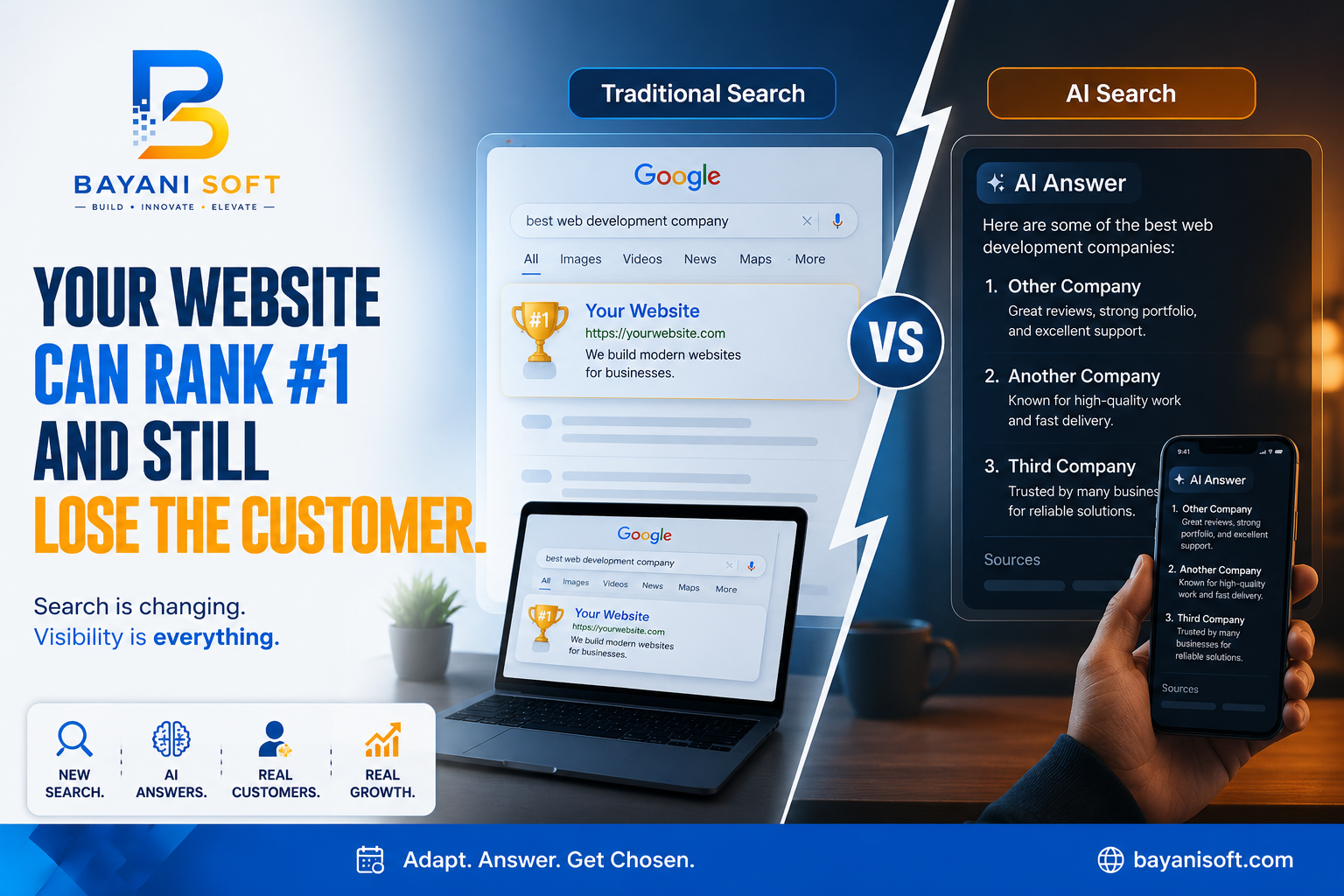
For years, businesses chased one thing: the #1 position on Google. Now, that goal alone can leave you dangerously behind. A customer might search for a service today and never scroll through ten blue links. Instead, they can ask an AI-powered search engine a detailed question, compare several options, and make a decision before they ever visit a traditional search result. That changes the game.
And it creates a new question for every business owner:
“When AI answers my customer’s question, does my business appear in the answer?”
The Search Result Is No Longer the Destination
Google has pushed Search into a major AI-driven transformation. It also reports that AI Overviews now have more than 2.5 billion monthly active users, while AI Mode has passed 1 billion monthly users. It also says AI Mode queries have more than doubled every quarter since launch. Meanwhile, recent research and industry analysis show that AI-generated answers can change how users interact with traditional search results. So, a business can hold a strong organic position and still miss part of the customer’s decision-making journey. That sounds alarming. However, it also creates a massive opportunity.
Customers Are Starting With Questions, Not Keywords
Think about the difference. Yesterday, someone might search:
“web developer near me”
Today, they might ask:
“What should a small business look for before hiring a web development company?”
Then they might ask:
“Which companies have experience with businesses like mine?”
After that:
“Compare the best options and explain which one offers the best value.”
That conversation contains far more buying intent than a simple keyword. Consequently, businesses need content that answers real questions, not pages that simply repeat keywords.
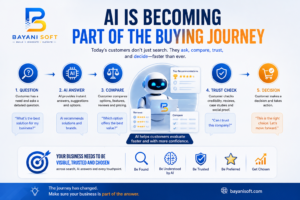
AI Is Becoming Part of the Buying Journey
The customer journey now looks increasingly like this:
Question → AI answer → comparison → trust check → website → enquiry
Notice something important. The website still matters. However, the website may no longer be the first place where the customer discovers the business. That distinction could become one of the biggest digital marketing changes of the decade. Google itself says its AI Search experiences can surface links and supporting content while users explore complex questions. Therefore, businesses should stop thinking only about:
“How do I rank this page?”
They should also ask:
“How do I become the source an AI system wants to mention?”
The New Digital Visibility Battle
Traditional SEO focuses heavily on search rankings. Modern visibility requires a broader approach. Your business needs to become:
- Findable in traditional search
- Understandable to search engines
- Citable in AI-generated answers
- Trustworthy enough to recommend
- Relevant to specific customer questions
- Consistent across your digital presence
- Useful enough for people to keep exploring
That means thin pages, generic blog posts and keyword stuffing have even less room to survive. Instead, businesses need original information, clear expertise, useful answers and strong digital foundations. Google has specifically encouraged website owners to create unique, non-commodity content and improve page experience, images and other supporting elements for the changing search environment.
Here Is the Part Most Businesses Miss
Getting mentioned by AI does not mean abandoning Google. It means expanding your definition of search. A strong digital strategy now needs to consider multiple discovery surfaces.
| Old Thinking | New Thinking |
|---|---|
| Rank on Google | Become visible across search and AI |
| Target keywords | Answer customer questions |
| Get impressions | Build recognition and trust |
| Write for rankings | Write for humans and machines |
| Chase backlinks only | Build genuine authority |
| Publish more content | Publish more useful content |
| Track rankings | Track visibility, mentions and conversions |
The winning businesses won’t necessarily publish the most content. They’ll publish the most useful evidence.
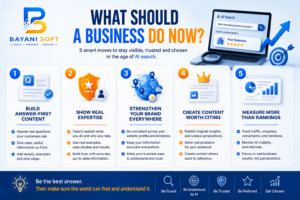
What Should a Business Do Now?
Start with five moves.
1. Build Answer-First Content
Create pages that directly answer the questions customers ask before buying. Don’t bury the answer under 800 words of introduction. Give the useful information first. Then provide the detail, evidence and next step.
2. Show Real Expertise
AI systems need reliable information to work with. Your website should clearly explain what you do, who you serve, where you operate and why customers should trust you.
- Use real examples.
- Use specific details.
- Use original insights.
3. Strengthen Your Brand Everywhere
Your website shouldn’t exist in isolation. Customers—and increasingly AI systems—can encounter your business through search results, directories, reviews, publications, social platforms and other websites. Therefore, consistency matters. Your business name, services, locations and expertise should make sense across your digital footprint.
4. Create Content Worth Citing
This is where many businesses can gain an advantage. Instead of another generic article titled:
“10 Benefits of Digital Marketing”
publish something genuinely useful.
For example:
“How Much Should a Small Business Spend on a Website in 2026?”
Or:
“Why Your Google Traffic Dropped Even Though Your Rankings Improved.”
Or:
“7 Website Problems That Quietly Destroy Local Leads.”
These topics answer commercial questions. More importantly, they give customers something they can actually use.
5. Measure More Than Rankings
Rankings still matter. However, they no longer tell the entire story. Businesses should also watch:
Organic traffic + branded searches + enquiries + conversions + AI visibility + referral sources + customer behaviour
Because ultimately, visibility without business results means very little.
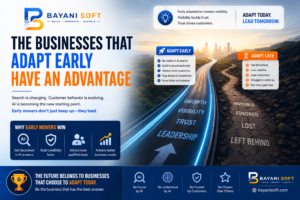
The Businesses That Adapt Early Have an Advantage
Nobody can guarantee that Google, ChatGPT or another AI system will mention a particular business. Anyone promising guaranteed AI citations should make you cautious. However, businesses can improve their chances by becoming easier to understand, easier to verify and genuinely useful to customers. That principle isn’t complicated.
Be the business that has the best answer.
Then make sure the web can understand that answer.
The Real SEO Question for 2026
Don’t ask only:
“Where does my website rank?”
Ask:
“When my ideal customer asks AI who they should trust, does my business have a reason to appear?”
That question changes everything. Because search is no longer just about winning a position. It’s about winning the recommendation. And for businesses that start preparing now, that shift could become one of the biggest digital opportunities of 2026.